
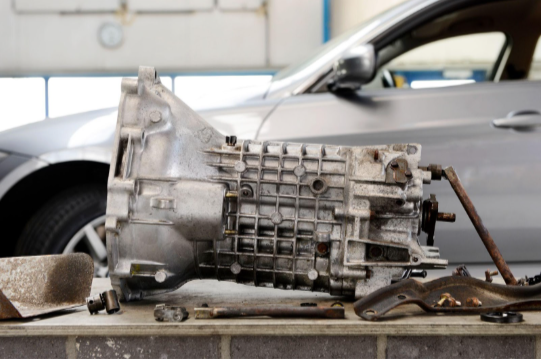
Toyota has long occupied a unique position in the automotive world as a manufacturer whose vehicles are expected to last well beyond what most competitors deliver. A significant part of that reputation rests on the quality of Toyota’s transmissions, which have earned a following among mechanics and vehicle owners alike for their durability and predictable behavior. Yet even the most robust transmissions eventually reach the end of their service life, and understanding how these units work — and what to do when they fail — helps owners make smarter decisions about their vehicles.
The Toyota Transmission Lineup: Manual, Automatic, and CVT
Toyota has produced an enormous variety of transmissions over the decades, spanning manual gearboxes, traditional automatic transmissions, and continuously variable transmissions. Each type serves a different purpose and appears in different vehicle applications, so understanding the distinctions helps owners appreciate what’s working beneath their vehicle.
Manual transmissions in Toyota vehicles have historically been praised for their crisp shift feel and long service life. The W-series and C-series gearboxes found in Corollas, Celicas, and MR2s from the 1990s and 2000s remain popular among enthusiasts for their smooth engagement and proven durability. These units are mechanically straightforward, which makes them relatively inexpensive to service and repair compared to their automatic counterparts.
Toyota’s automatic transmissions span several families, with the A-series being among the most widely produced. The A340 and A750 units found in trucks and SUVs like the 4Runner, Tacoma, and Land Cruiser have built strong reputations for handling heavy loads and harsh conditions. In the passenger car segment, the U-series automatics — including the U151E and U250E — serve vehicles like the Camry, RAV4, and Highlander with smooth shifting and reliable performance across hundreds of thousands of miles.
More recently, Toyota has expanded its use of CVTs in hybrid and economy vehicles. The electronically controlled CVT in the Prius, for example, operates in conjunction with the hybrid system to optimize fuel efficiency. While mechanically different from traditional gear-based transmissions, Toyota’s CVT implementations have generally proven more reliable than those from some competing manufacturers.
Common Toyota Transmission Problems by Model
Despite their overall reliability, certain Toyota transmission applications have known weak points that owners should monitor. The U151E automatic found in the 2004-2006 Camry V6, for instance, developed a reputation for premature torque converter failure and harsh shifting related to valve body wear. Regular fluid changes help mitigate these issues, but units with neglected maintenance sometimes require complete replacement before reaching 150,000 miles.
The A340 series used in older 4Runners and Tacomas occasionally develops issues with the overdrive solenoid and accumulator pistons. When these components wear, the transmission may exhibit delayed engagement or flared shifts between third and fourth gear. Addressing these issues promptly through solenoid replacement or valve body servicing often prevents the need for a full rebuild.
Early RAV4 models equipped with the ECT automatic transmission sometimes experience torque converter shudder during light acceleration. This vibration, often felt between 35 and 50 miles per hour, typically stems from degraded friction material in the torque converter lockup clutch. While a fluid change with the correct Toyota-specified fluid occasionally resolves mild cases, more advanced shudder often requires converter replacement.
The Critical Role of Proper Fluid Maintenance
Transmission fluid is the lifeblood of any automatic transmission, and Toyota specifications are particularly important to follow. Toyota’s WS (World Standard) fluid, introduced in the mid-2000s, was designed as a lifetime fill in many applications. However, experienced transmission technicians widely recommend changing this fluid at regular intervals despite the manufacturer’s long-life designation.
The reasoning is practical: transmission fluid degrades through heat cycling, oxidation, and contamination from normal clutch pack wear. Over time, degraded fluid loses its ability to protect internal components and maintain proper hydraulic pressure. A drain-and-fill every 50,000 to 60,000 miles using the correct WS fluid helps maintain shift quality and extends the overall life of the transmission.
Using incorrect fluid in a Toyota automatic transmission can cause serious problems. ATF formulations differ significantly between manufacturers, and using a generic fluid where WS is specified can lead to shuddering, slipping, and premature clutch wear. Always verify the correct specification for your particular Toyota model and year before performing any transmission service.
When Repair Stops Making Sense
Transmission rebuilds are complex, time-consuming, and expensive. A full rebuild on a Toyota automatic can range from two to four thousand dollars depending on the unit, the extent of internal damage, and the shop’s labor rate. For older vehicles where the transmission’s value represents a significant portion of the vehicle’s total worth, a rebuild may not be the most economical path forward.
This is where sourcing a replacement transmission from the JDM market offers a practical alternative. Low-mileage JDM Toyota transmissions imported from Japan provide a cost-effective solution that avoids the labor-intensive and uncertain process of rebuilding a heavily worn unit. These transmissions typically arrive with 40,000 to 70,000 kilometers and have been maintained under Japan’s demanding vehicle care standards.
The advantages of a JDM replacement extend beyond cost. A complete used transmission arrives as a tested, functioning assembly rather than a collection of refurbished parts reassembled in a shop. The internal clearances, bearing preloads, and clutch pack conditions reflect factory specifications achieved through actual operational break-in rather than manual adjustment during a rebuild process.
Installation Considerations for Toyota Transmission Swaps
Swapping a Toyota transmission requires attention to several compatibility factors. First, confirm that the replacement unit matches your vehicle’s engine and drivetrain configuration. A transmission from a two-wheel-drive Camry won’t work in an all-wheel-drive Highlander, even if the engine family is the same. Transfer case attachment points, output shaft configurations, and electronic control modules all vary between drivetrain layouts.
Second, verify the transmission’s electronic compatibility. Toyota’s ECT-i (Electronically Controlled Transmission with Intelligence) systems use speed sensors, solenoids, and shift algorithms that may differ between production years. A transmission from a 2005 model may not communicate correctly with a 2010 vehicle’s ECU without addressing sensor and connector differences.
Third, plan for supporting components. Transmission mounts, cooler lines, shift linkage, and the torque converter should all be evaluated during installation. Many experienced shops recommend replacing the transmission mount and cooler lines as a matter of course during any swap, as these are inexpensive items that can cause problems if they fail shortly after installation.
Extending the Life of Your New Transmission
Whether you’ve just completed a swap or want to maximize the life of your current transmission, a few habits make a meaningful difference. Allow the transmission to warm up before driving aggressively, especially in cold weather. Avoid towing beyond your vehicle’s rated capacity. Come to a complete stop before shifting between reverse and drive. And commit to regular fluid maintenance using the correct Toyota-specified product.
These straightforward practices protect the transmission’s internal components from the accelerated wear that leads to premature failure. Combined with attentive driving and periodic inspections, they help ensure that your Toyota’s transmission delivers the kind of long-term reliability that the brand is known for.
About the Author
